




We’re talking through the ins and outs of the renovation permitting process of our Red House renovation, which we managed ourselves.

We have big news! The Red House renovation has officially passed all inspections and the permitting process of the remodel is complete! This was our first time acting as general contractors on a permitted project and we learned A LOT. Throughout this post, I’ll be sharing how we navigated the permitting process.
A quick note: Before diving into the specifics of our project, it’s important to know that every state, city, town and municipality handles building permits differently. We’re outlining our personal experience in our small township in Michigan, but regardless of where you live, your process may vary.
In This Post
The Permit Application Process

In the state of Michigan, it is legal for homeowners to work on their own homes and also act as the General Contractor on their own home renovation projects. Since handled the hiring and management of each subcontractor and also completing some of the work ourselves, it made sense for us (me) to act as GC. Our initial permit application was a repair/replace permit that covered the general scope of the project. Our township sent out an initial inspector to check out the building and confirm the scope of work then the permit was emailed to us in a couple of days time. Pretty straightforward!
The Two Inspections Per Permit
OK, we’ve got the general building permit. How does the process work? In most cases, each permit requires two different inspections. A rough inspection and a final inspection. Here’s how it works:
- The rough inspection is just what you’d think; The inspection of the initial rough work, largely while the walls are open or partially open. With electrical rough work, for example, this included the installation of the new panel, proper location of all switches, outlets and fixtures and pulling wire to all termination points.
- The final inspection happens after all fixtures are in place and ensures that all everything functions properly. To once again use the electrical work as an example, that final inspection required all switches, dimmers, outlets and lights to be installed and fully functional per code.
Subcontractors and Trades

We handled countless minor repairs on our own, but also needed to hire licensed professionals for the major stuff. Below are the subcontractors that we hired and managed. Each of the tradespeople below was responsible for pulling their own permits and calling in their own rough and final inspections for their specific trade. We managed their timelines and target start/end dates.
- HVAC/Mechanical – This permit was primarily for a brand new gas forced air HVAC system. It also included bathroom fans and kitchen hood vent.
- Plumbing – The vast majority of the house was re-plumbed with new supply and waste lines. It also included appliances that use water like the dishwasher and washer/dryer.
- Electrical – We re-wired the entire house and added a larger electrical panel to future-proof for things like EV charging, bringing power to the barn and maaaaybe a hot tub down the road.
- Building – We reconfigured a handful of walls and completely removed and reconfigured the roof of the main portion of the house. This included installation of windows and the the big sliding doors.
Since we’re also managing content calendars and posting schedules throughout the process, our timelines are often drastically different than the average homeowner. This makes it crucial for us to have upfront conversations with anyone we hire so they’re aware that they might be doing things in an order that isn’t what they’re used to. For example, we completely finished one bathroom before we finished the rough plumbing and electrical phase of the second bathroom. If contractors have an issue with this, they likely aren’t the best partner for us, and that’s totally fine. We understand that our job creating content for our corner of the internet is unique and can be challenging to a process that’s pretty set in stone!
Green Tags and Stamps
In Michigan, each type of inspection receives a small green paper sticker that gets applied to the main building permit for the project. Each inspector must then sign off on each inspection phase. When each rough or final inspection is called in, there is always a period of breath-holding!

We know that all of our contractors are completely trustworthy and do their respective work up to code. The inspectors, however, are human and have different interpretations of code. Overall, we found the inspectors to be fair and straightforward.
We only had one small instance where we needed to rush a bit of work that we weren’t quite ready for in order to pass an inspection. The work needed to be done anyway, so we pushed the timeline forward and got it done. A bit stressful in the moment, but no big deal looking back!
Small Town Michigan vs. Chicago
In our little Michigan township, if we had a question about the inspection process, we had direct access to an actual human being at the township office. The folks there were communicative and kind and held our hand as much as we needed as we worked through the process. It was genuinely refreshing!

In Chicago on the other hand, we leave the permitting process to the professionals. While a homeowner can act as their own GC here in the city, the process is much less straightforward and can take weeks for each inspection instead of days. On our Two Flat gut renovation, for example, we used a design/build firm that is Self-Certified to ensure compliance. We found that certification to be worth its weight in gold and the process moved efficiently and on-schedule.
To GC or Not to GC?
Like in most DIY projects, the benefits of acting as your own GC come from the financial savings. For example, our favorite Michigan contractor charges a 20% GC/project management fee on top of the physical work that his team does if he’s the one managing and hiring subcontractors. There is additional risk and time involved for him, so the fee makes perfect sense and he deserves every penny of it.
Kim and I both work on Yellow Brick Home and managing our properties full time, so for us this type of work is part of our job. The interviewing and quote-gathering process is nothing new for us and we’ve managed enough projects to be able to communicate and work with contractors efficiently and effectively. For me, acting as GC over the course of the last year and a half was a no-brainer that saved us tens of thousands of dollars. It was a heck of a lot of effort, but very worth it for us!
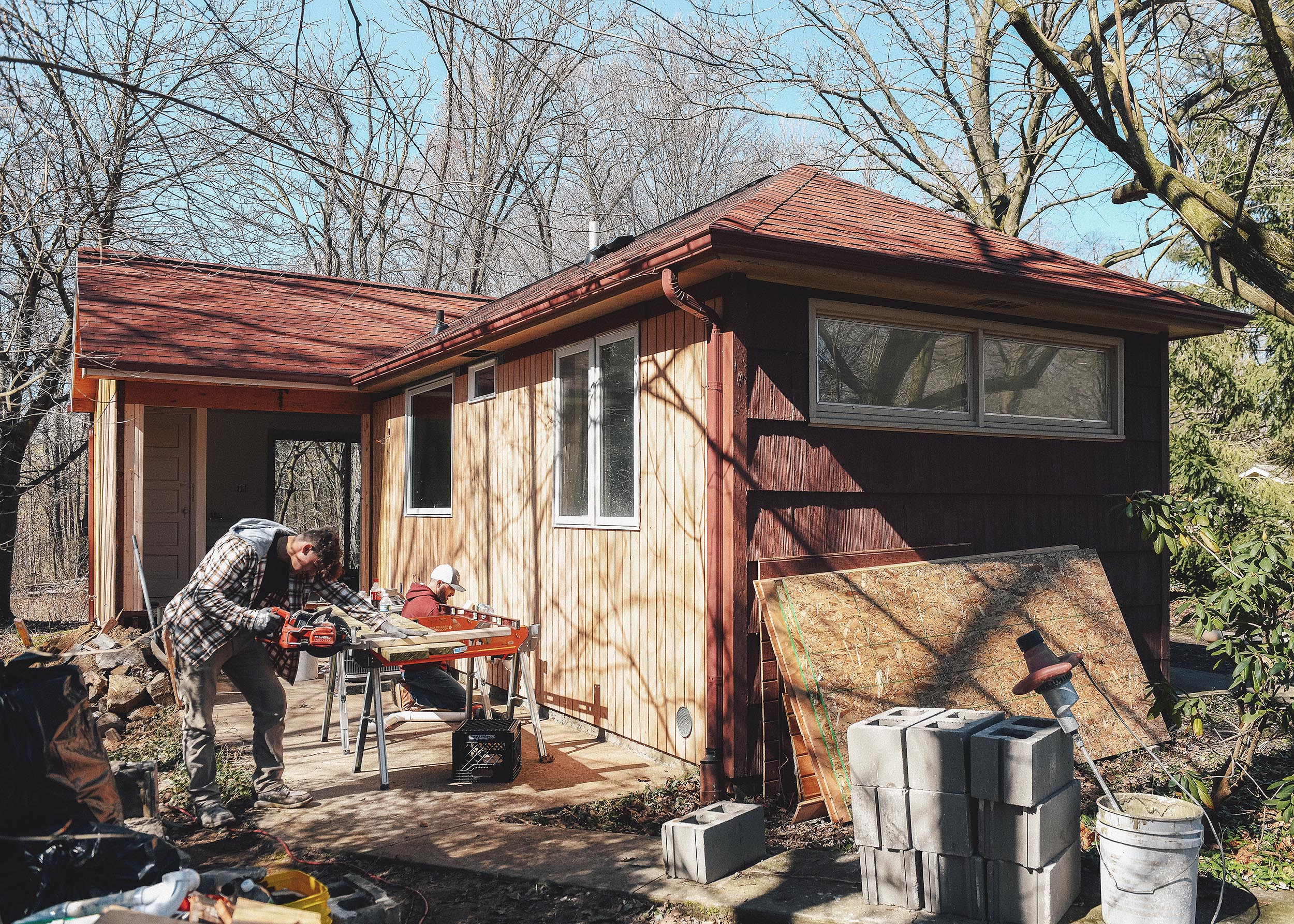
If you’re not adept at this kind of work and don’t have the time do dedicate to management of all of the people and moving parts, it may not be for you and that’s OK! We think that 20% is a relatively small price to pay for a seasoned professional to oversee a project from start to finish and ensure that it’s all done safely and efficiently.
So, have you ever GC’d your own project? Would you? Or are you on team Leave-It-to-the-Professionals? We’d love to hear your thoughts!









We did a large renovation on a rowhouse in DC, and more recently built an office/guest cottage (insta @thecottage.at.bluejayway) on our property in Charlottesville. In both cases, we hired a GC and were so glad we did! We have also been glad of design services (in-house w/GC in DC and an independent architect in VA) that help bring your vision to life with great ideas and practical experience.
Thank you so much for walking through this. We are in the planning/interviewing contractor stage for significant renovation on a 100+-year-old house in Chicago. Would you be comfortable sharing the names of the GC(s)/firm you’ve used in the city? If not, totally understand.
Absolutely! Shoot us an email – team@yellowbrickhome.com. We got you!
We just hired a GC for our first-ever remodel (2 gut bath remodels and a new bedroom!), and the architect & structural engineer are drawing up plans as we speak. I’m so nervous! I would love to someday GC, it uses a lot of skills I enjoy, and I’m excited to see the process for the first time.
With the right GC, the process is challenging but also rewarding and fun! I could definitely see myself as a GC in another life.
I own two reprographics (blueprint) shops in San Diego, and my word of advice for homeowners who need a permit: use a permit processor (do not DIY it). Your architect/draftsperson should have a referral for you. And HECK YEAH to using a GC: we did a major remodel a few years ago, and I brought in my own floor guy (a referral from a good friend, no less). Well, he ended up yelling at me on the phone (ummmm…what?), which lead to me having to connect with an attorney (re: signed contract) was there was no way I was letting that guy back in my house. My amazing GC stepped in and helped get rid of the floor guy, and of course the GC brought in his own (trusted) floor guy. GC’s have their own network of good subs, they rely on those good subs to get their projects done; and they handle any and all of the problems that arise from the work/performance of their subs. If you can, let someone else handle that jobsite stress as you will still have plenty to deal with during your reno!
There is an absolutely HUGE amount of value in using a qualified GC for big projects! If our work wasn’t so adjacent to the trades, we’d never have the bandwidth to manage the scope of our projects on our own!
I love this topic, it’s not talked about enough on the diy/design blogs, or even enough in the world. How does one figure these things out, like permits and how to be a GC?!?!?!?! I have a construction management degree, but still I only learned from first hand experience. GCs are invaluable in their experience, and having key subs you trust doesn’t just come from doing a one-off project. I appreciate this post and the great comments too!
Thanks Julie! We definitely learned by experience as well and it took us a long time to feel comfortable taking on the acting GC role ourselves. Luckily, we have a handful of trusted GCs that we’ve been able to collaborate and learn from over the years on projects that we’ve hired out. It can definitely feel daunting at first!