




This post is part two of a two part series on our decade-long experience managing multiple properties in Chicago. Part one covered the more practical parts of being landlords; time commitment, leasing, background checks and maintenance. Today’s post focuses on the bigger picture items like ethics, financing and ‘is it worth it?’
While our last post covered everything from leasing to logistics, tenant relations and time commitment, today we’re digging deeper into the ethics of it all, how we make money, and answering the question: Is it worth it? Let’s wrap this up!
In This Post
Ethics + Morality
Being a landlord is so divisive these days. How do you handle the morality of it all?
Just about everyone, including us, has had a terrible landlord that’s tried to swindle a security deposit or raise the rent in the middle of a lease or skimp out on necessary repairs and maintenance. Landlords can be the worst. To put it bluntly, there are some landlords who find themselves in a position of power where they have the upper hand and can easily take advantage of people. This power imbalance sometimes leads to reprehensible behavior that gives all landlords a bad name. While some of them absolutely deserve that bad reputation, we feel that many of us simply don’t. There are good landlords out there. They can just be a little hard to come by.

In addition to recognizing the fact that there are horrible landlords out there, we also acknowledge the fact that we’re building long term wealth from our properties while our tenants are not. We don’t, however, feel that the landlord/renter dynamic is quite as one-sided and simple as it’s often portrayed to be. We’ve taken on massive amounts of debt and assumed a huge amount of risk in purchasing and renovating our spaces, sometimes over the course of years without earning a single penny. We acknowledge the privilege of owning multiple properties and are grateful for the position we’ve worked hard to find ourselves in. It’s been over a decade of hard work and sacrifice, but for us it’s all been worth it. If you’ve been following along for awhile, we hope that the love and effort that we put into these spaces that we’ve designed for other people to call home has been evident.
On the renters’ side of things, while some are saving to purchase their own home, we have also heard our renters say that they simply don’t want the upkeep or traditional responsibilities of owning a home and all that comes with it. This may be a result of living in the city, but many of our friends and acquaintances prefer to rent. This allows them time in their busy schedules to do anything but mow the lawn, remove snow, and be responsible for unexpected costs and general upkeep that come with ownership.
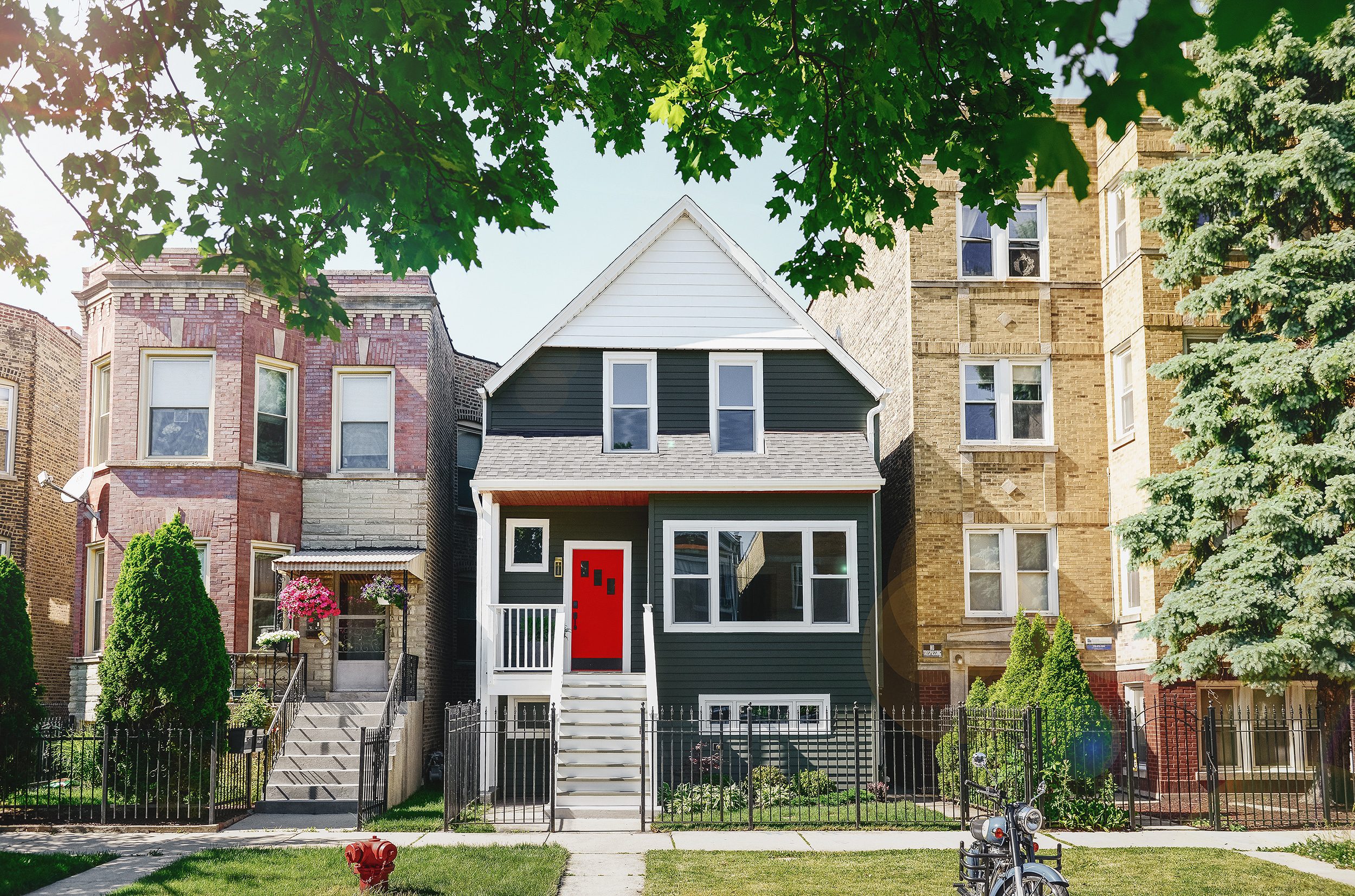
A couple of final thoughts on morality: It is very important to us that anyone has an opportunity to rent one of our units. We are nowhere near the top tier of rental prices in our neighborhood, which was a conscious decision and one we stick by. We love our neighborhood for the culture, the people, the housing diversity, the green space and the walkability among other things. We want to see our neighborhood maintain this charm, and we do so by restoring and caring for our homes and offering accessible unique units.
This final thought is certainly unique to Chicago, but may be applicable in other markets as well! In addition to providing unique, reasonably-priced and well-maintained units to our community, we’re also preserving the existing zoning of our properties. Technically, both our primary home and our investment property are zoned as two flats. If you’re from outside of Chicago, this basically means that the building is the same size and footprint as a single family home, but is divided into two separate units. It’s become quite popular in Chicago to purchase a multi-unit building, say a two or three flat, and down-zone it into a single family home. This effectively removes two rentable units from the market in favor of one single home. While this change may decrease population density, it also removes two rentable units from the market. There are obviously pros and cons to each zoning option, but we prefer to preserve rental units in our projects to allow for more options in our community.
What’s the hardest part of being a landlord?
Honestly, one of the toughest parts for us is when we have multiple sets of qualified, kind folks that are really excited about moving into one of our units and we have to decide who we lease it to. Kim has been in tears over it! It’s never fun to have to disappoint someone that really wants to live in one of the spaces we’ve worked so hard on, but we inevitably have to choose, and it’s a huge bummer to let people down.
What’s the best part of being a landlord?
We absolutely love providing people with unique, well maintained spaces at reasonable rates in great locations since they can be so tough to find in Chicago! We take our role very seriously and have had multiple tenants tell us that we’re the best landlords they’ve ever had. (I say this humbly, although of course that feels great to hear and we’re proud of the sentiment!) We genuinely care about our spaces and the people that call them home, and we do our best to make their experience renting from us a great one.
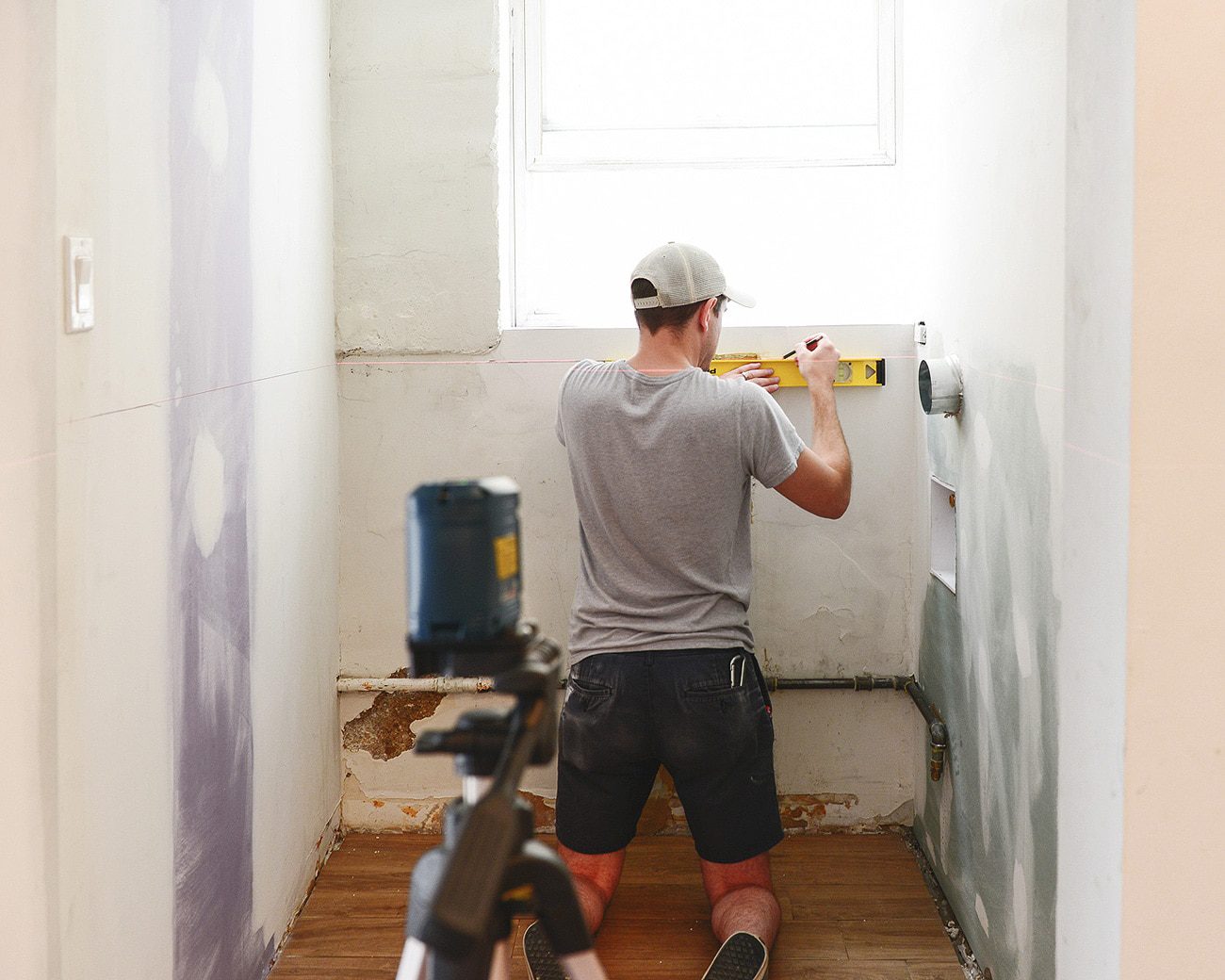
In 2017, we had saved enough funds to properly renovate the garden unit of our Chicago home. Here, we’re prepping the tiny laundry room for a big makeover.
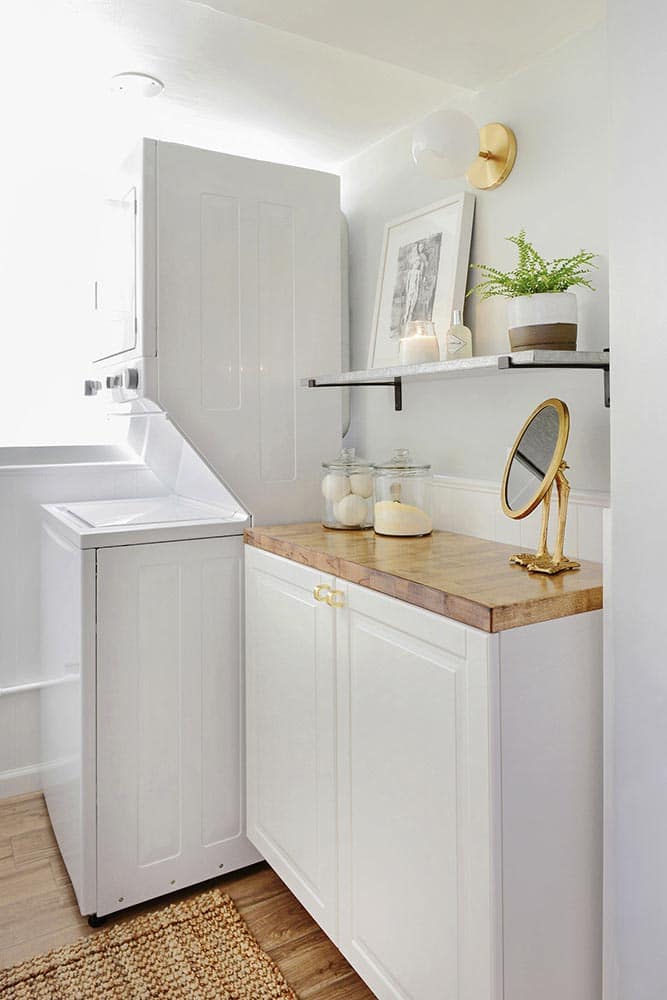
And here’s the completed space! The room is very narrow, but we wanted a way to incorporate extra storage. A stacked unit with an IKEA credenza fit the bill – barely! In Chicago, having a laundry room in a rental is a luxury, so we’re happy with where it ended up. See the makeover!
What has surprised you the most?
The thing that’s surprised us the most is just how much we actually enjoy this job! As we mentioned earlier, we never intended to become landlords, but it was a means to an end so that we could afford to purchase our home. Once we found our groove, we found that we were pretty good at it and doubled down by purchasing an additional property to manage. We never would have thought that we’d find this job as rewarding as we do!
Money + Profit
How do you determine the price of a rental unit?
We factor in all of our expenses to own the property, including our mortgage, taxes, utilities (water, trash removal and electric for the common areas are paid by the property owner in Chicago), and maintenance. We then compare this number to the average rental cost for similar units in our neighborhood and attempt to find a balanced sweet spot.
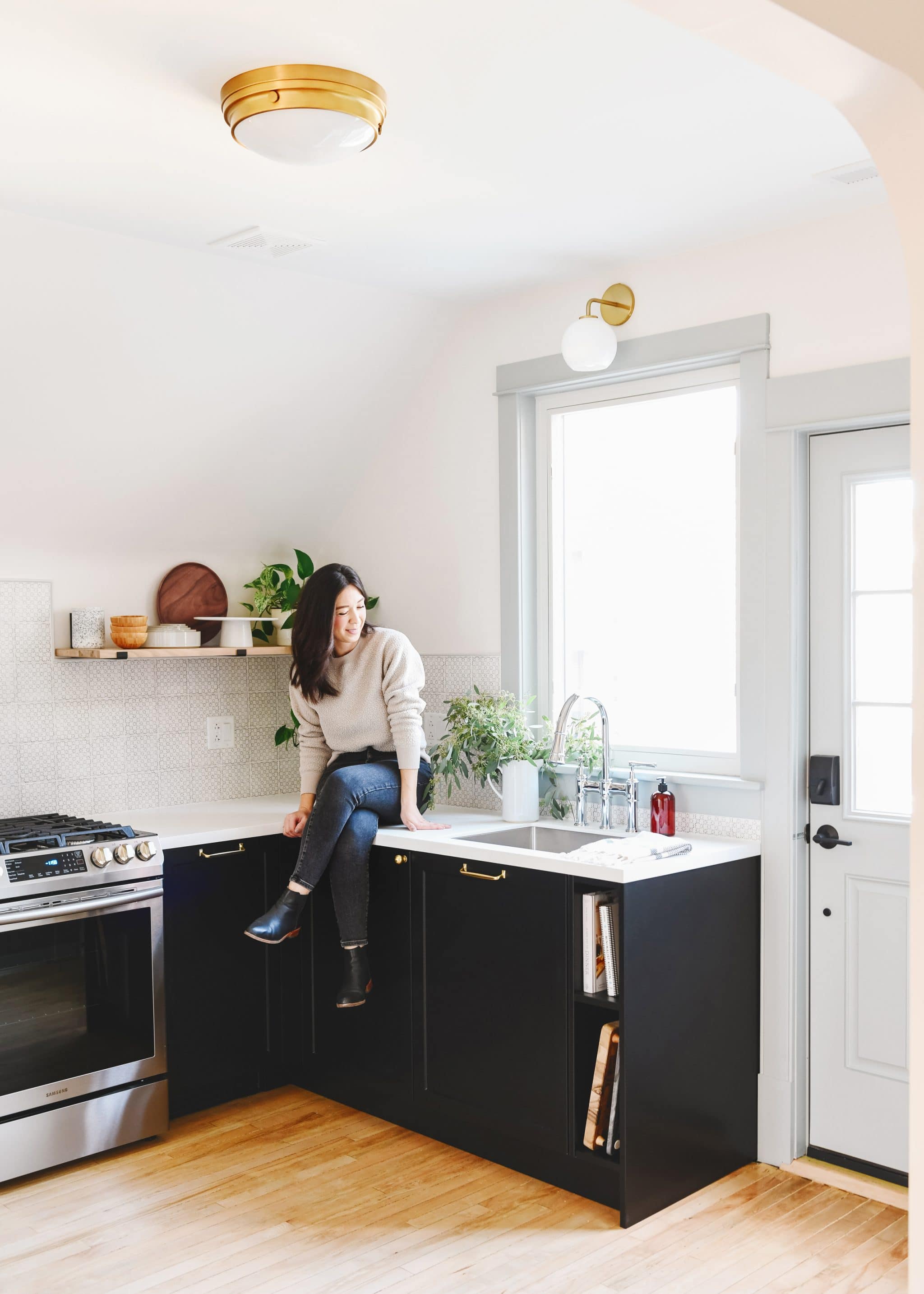
Our goal is to provide unique, high-quality units in great, walkable locations at an incredible value to our tenants. Yes, we could likely increase all of our rents and keep every unit full. We even had one prospective tenant ask us ‘What’s the catch, though? How is it so cheap?’ when we showed unit 1 of the Two Flat for the first time. That said, we can’t afford to do this for free, but we’re also not ones to price gouge! (See above re: terrible landlords) We think that providing units at a good value attracts great people that want to stay in their homes. In the long run, the fewer moths our units are vacant, the more profitable they are for us. The less frequently our units turn over, the less time we spend listing and showing them and assuming new risks with new tenants.
How do you budget for repairs and maintenance? Do the rents support this budget?
Yes, as we mentioned above, maintenance is factored into the amounts we charge for rent. There are two common rules of thumb to estimate for this; One is to factor for 1% of property value annually. For example, a $250,000 building will require around $2,500 of annual maintenance. The other method is to calculate $1 per square foot, which would mean that a 1,000 square unit would need $1,000 of maintenance per year. Since we handle much of our own maintenance, our costs are likely on the lower end of this spectrum, but we try to be prepared for the unexpected.
Do you make a profit on your rentals?
The short answer is yes, we profit on our rentals, but that doesn’t tell the whole story. At the Two Flat, the monthly rents cover all expenses and leave us with a nice profit end of each month. And the rent in our own home allows us to live (mostly) mortgage free. We did, however, undertake a massive amount of risk involving a substantial mortgage and a six-figure renovation loan on a dilapidated 130-year-old building when we purchased it. At minimum, we need to cover our monthly expenses, but we’re also in it for the long haul. We’ve owned the Two Flat for three years and in that time, we’ve increased the value of the building significantly by renovating it.

We’ve also been lucky enough to see property values in that specific part of our neighborhood increase significantly. Our timing was great, and the building is now worth more than what we’ve invested in it, but we have no intention of selling the building. We think of our rental properties as a large part of our retirement plan since our little family business doesn’t exactly offer a 401k! When the time is right, we’ll sell the building as part of our retirement strategy and hopefully, make a nice profit.
Loans + Insurance
How long does it take to pay back a renovation?
For the Two Flat project, we bundled a construction loan with the mortgage. This wasn’t exactly simple, and we almost lost the building over it because most banks weren’t interested in taking a risk on a couple of bloggers with no track record of renovating houses that they don’t live in!
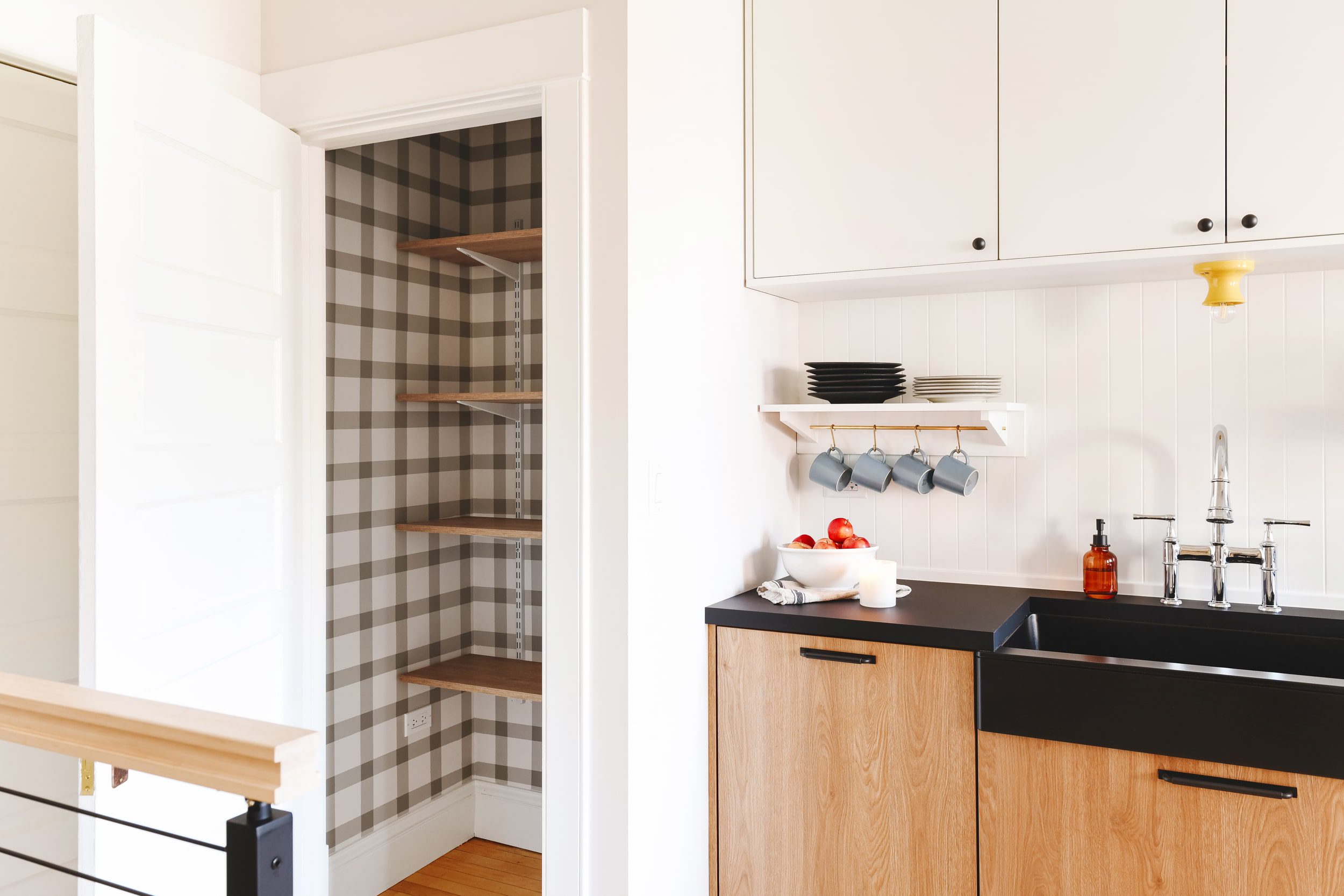
We ended up finding a local community bank that was willing to work with us, and it all worked out in the end. Due to the risk that the bank took on, our lender was significantly more involved in the process and financial disbursements to our contractors than what we would have liked, but we got the job done. That’s a long-winded way of saying that we’re still paying it back since it was a part of our mortgage package! Outside of this huge project, we do our best to pay cash for all of our renovations so we’re not beholden to a bank or fluctuating interest rates.
How does insurance work? Who is responsible for what?
LeaseRunner (discussed in part I) allows tenants to submit proof of renters’ insurance, which is something we require of all of our tenants. We highly recommend that if you’re considering leasing, that you, too, require renters insurance. Renters insurance covers tenants’ personal property, and it often provides coverage for additional living expenses (hotels etc) if the unit is damaged or unlivable for any reason. Our insurance covers the building itself. It’s fairly straightforward, but we’re not insurance experts. We always rely on our insurance provider to break down the specifics and ensure that we’re adequately covered. As always, laws vary from state to state, so always check with your local provider!

The Big Question…
Is it worth it? Be honest.
Yes! It’s worth it for us, but we thrive on this sort of thing. We genuinely enjoy the controlled chaos of renovating and taking care of old homes, and we’ve found a handful of ways to make a living doing it. After decades of homeownership experience and multiple down-to-the-studs renovations, we understand the systems of a home and the ways that they work. We know our limitations and hire people we trust to help us when we exceed them. Very little scares us, but we have a healthy fear of fire and water, as we think any homeowner should.

Purchasing and managing a rental property is work. It requires risk. It also requires effort and time and money and doing things you don’t want to do when you don’t want to do them. It can be exhausting. It can also be fulfilling and rewarding and challenging and profitable. In our experience, the potential income from a rental property is absolutely not passive. It is work. But we enjoy the work. We have time for the work because we view it as an extension of our ‘full time’ job.
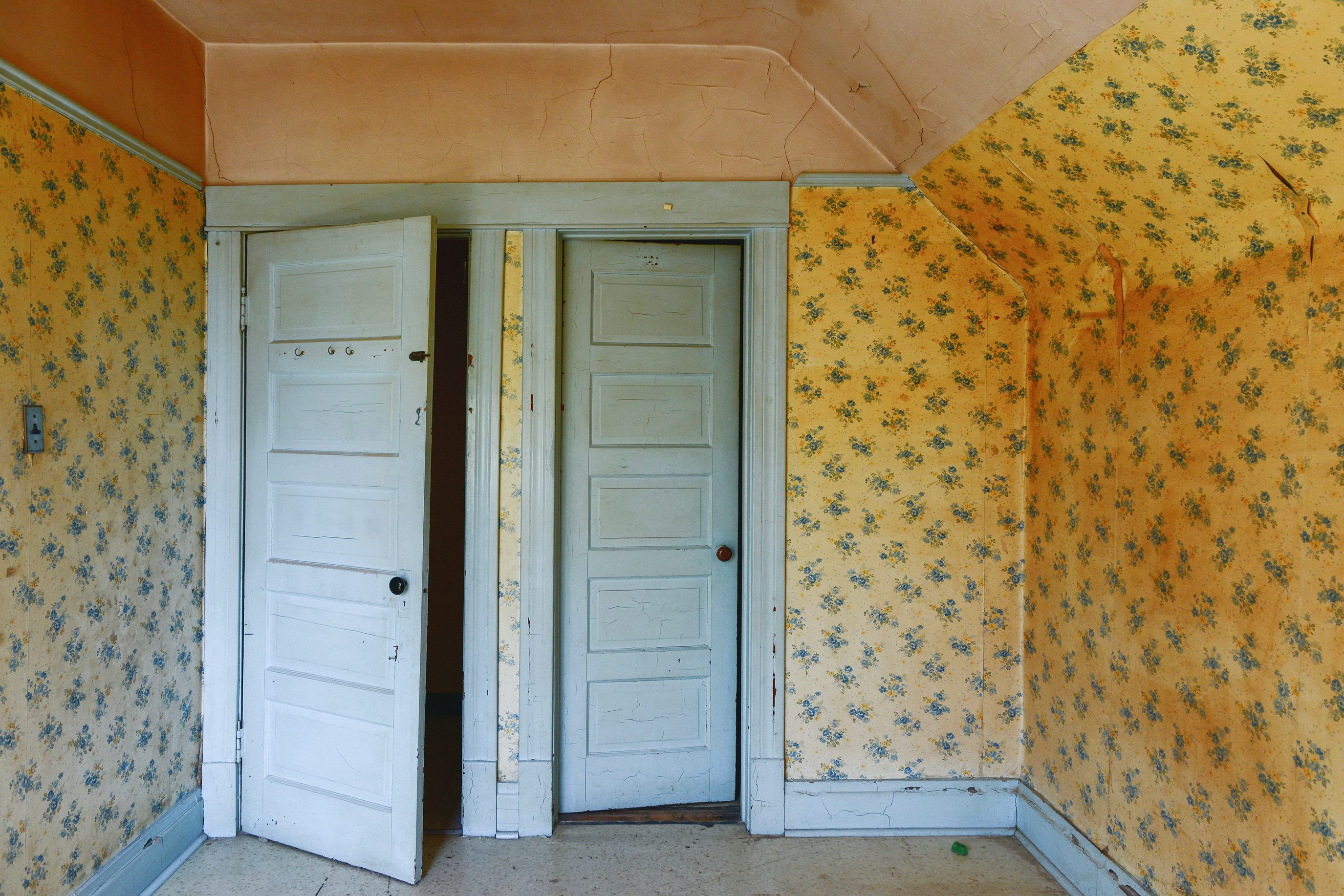
Neither of the homes that our rentals are located in are paid off. We have mortgages and bills and taxes and maintenance and repair costs. But for us, the math checks out! In the end, we profit each month, but more importantly, we’re building long term equity in these homes, and the plan is that we’ll feel comfortable when it comes time to sell them retire.
If you’re considering purchasing a rental property, we’d encourage you to ask yourself a few questions:
- If something unexpected happens to your own home, do you know how to diagnose the problem and who to call if you can’t DIY a fix?
- Do you enjoy the regular maintenance tasks of keeping your own home in good working condition, and do you have time to do them?
- Do you understand the mechanical systems of your home and how they interact with each other?
If you’re nodding your head yes to these questions and you’re not deterred by the logistics of getting set up then you’re already steps ahead. If you’re nodding your head no, but you’re still interested, are you prepared for the financial commitment involved in hiring a property manager and/or maintenance crew? That’s always a viable option, and it would be worth interviewing and comparing a handful of agencies in your area. The rest you’ll learn in time, just as we did.
We hope this two part series has been helpful, insightful or just a fun peek behind the curtain of how we view our role as property managers. We’re happy to answer any additional questions you may have and hope we can be a resource for anyone considering a rental property of their own. As always, thanks for being here and thank you for your incredibly insightful questions!
In case you missed it, you can also read part one of this two part series. If interested, we also organize every post we’ve written about several of the homes we’ve renovated, right here. Before and afters, DIYs and extensive renovation are all there!









Thanks for taking the time to share your experience and learnings. It is so helpful to hear about how this can contribute to affordable housing options while still balancing your goals.
It kinda feels like you’re apologizing a bit for your position as landlord/property manager etc. While you may have had advantages others have not, via good parents/education/health, do not short suit yourself. Hard work pays off, and you have certainly put in the work, and taken multiple risk that many including myself have not! Owning your own business means you are never really off the job, and you assume all the risk associated with that. Kudos for your humility and care in setting prices and interest in potential and current renters, but honestly I am impressed with your work ethic and drive! No apologies necessary in my opinion.
We appreciate your insight and feedback. It’s important for us to be very self-aware every step of the way. Our city, our neighborhood mean a lot to us, and our goal is to give back more than we take.
Hard work does not always pay off. Many people work very hard their entire lives and will never have the ability to own their own home for a multitude of reasons. I appreciate Kim and Scott addressing the morality question and I don’t think any conversation regarding landlords is complete without it. Acknowledging privilege is important.
I got this to! But I have never once questioned whether you would be good landlords. Obviously us readers only know you through one lens, the blog/social media, but I have always gotten the intention/feeling that you are amazing landlords who would not take advantage of people. It was so interesting to hear your take on this though, and the behind the scenes side of the business! Was it also you two who did an air bnb breakdown? Or maybe that was Young House love when they had the beach houses, but that would also be very interesting to read!
Thanks, Megan! And yes, we’ve written a few Airbnb posts, but it’s been a couple of years! This one shares how we manage a building from afar, and this one shares our experience after a full season.
love this, and love that you guys have thought all this through. I especially appreciate that you’re preserving the multifamily zoning/use. thank you for sharing! Have you ever looked into the programs that report tenants rent payments to credit bureaus? I looked into it a bit and pinata works with smaller building owners – i think i remember they quoted $3/month/unit for the service, which isn’t that much, but would add up. Seems like a potentially nice perk, though, and a nice way to help even the equity field, for tenants who want to become owners, or need help building their credit.
Thanks Kara! This is a great idea and we’re definitely open to it if there is interest from our tenants.
These two posts have been so timely for me. We just purchased a two flat in Niles that we plan to live in with a tenant, and this wealth of advice and knowledge has been fantastic. We also hope to continue to offer affordable housing but are clueless planning for future expenses, taxes, utility costs, etc. Thank you for sharing, it’s been so helpful as we start this journey!
I’m tired of people feeling like they need to apologize (in fear of cancel culture) for working hard to secure a future that gives you financial stability. My son’s friends who are all in their early 20s view landlords and owning rental units as somehow morally currupt which makes NO SENSE. There are many many people who don’t WANT to own a home, who need to rent while they are looking to buy, are only living someplace for a short time etc etc. There ARE terrible landlord yes but it shouldn’t be viewed as always a BAD thing to apologize for if a person works hard, buys properties and rents them out. You’re still providing a service for a community that needs it. Yes I know there are predatory conglomerates that gobble up single family homes with all cash offers while boxing our homebuyers and destroying neighborhoods but not all landlords are bad and you shouldn’t apologize. I’m sad you need to spend so much time defending yourselves. Being a landlord isn’t inherently unethical. Love it and happy for you that you’ve figured it out.
Thanks for your insight, Susan! Since becoming landlords, we’ve heard it ALL. We feel lucky to have this platform to share all sides of the equation with our audience. We’re proud of our work as landlords and certainly don’t apologize for what we’ve accomplished, although it’s important for us to acknowledge that we’re in a position that many are not, and this is something for others to consider who may be looking to pursue this work.
I so admire all that you guys do. Thanks for being such good people and sharing your journey. Your style and the spaces you create are beautiful, too!
Clearly the topic is a bit fraught. As an older renter living in a rapidly gentrifying city my sympathies probably run a bit more to the renter side, but I have nothing to quibble with here because you’ve considered things in a balanced way. I think I get why some other commenters might feel a bit defensive of you guys, but for my part I think it makes sense that you think through multiple arguments on the topic. You’re trying to make sure you’re not in some privileged bubble, as we all ought to do at least occasionally. I said I wouldn’t quibble, but I will say one thing. While you guys chose your path and some renters choose renting, the vast majority of renters do not have a choice in this country. But that doesn’t mean you ought to apologize or feel bad in any way. Somebody has to own the homes that others rent, and the fact that you take your responsibilities seriously means I for one am glad yall are among that group. I’d much rather my rent go toward a family I have direct contact with than some corporation with a massive portfolio of properties. This is the system we have and it’s not changing anytime soon; as long as that’s true we need some compassionate people to be part of it.
Thank your for sharing this comment, Karen! It’s important to understand both sides, and we appreciate you chiming in with your experience and thoughts on the topic.
This series was SO helpful! As someone who became a landlord for the first time this year and has no idea what they’re doing, this information is priceless!
I truly appreciate how transparent you both are regarding landlording, the conclusion you’ve come to regarding the ethics of it, and the detailed financials behind everything. I say the following as a longtime reader, and out of a place of respect for anyone who approaches an ethical issue from a measured place, as you both so clearly have done: I think you’re both right that *if we are going to have landlords*, then you two are about as good as it gets. You clearly care about your tenants, the properties, the zoning issues, and the pace of gentrification. This is all admirable!! I just think that this blog repeatedly misses the larger structural critique, which is that we should be working together to eliminate the practice of landlording, which is, at the end of the day, the privatization of what should be a public good. You’re right, some people don’t want the burdens of homeownership. But that doesn’t mean that privatizing and then renting out a public good is the solution. We could have social housing apartments or other financial structures that result in “renters” still building equity with their “rent” payments. In part 1 of this series, you mentioned that you dislike the term “landlord” and prefer the term “housing provider.” I strongly encourage you to not use the latter term, because you are doing the opposite: you are owning more housing than you need, and then profiting off of renting it back to those who need it. That is not providing housing any more than it would be “providing” books by taking it upon yourselves to block the entrance to the library and charge the public to get in. Certain things shouldn’t be privatized, and I believe housing (and libraries) are in that category. Anyway thank you for reading and for creating a public forum where you make room for comments like this.